
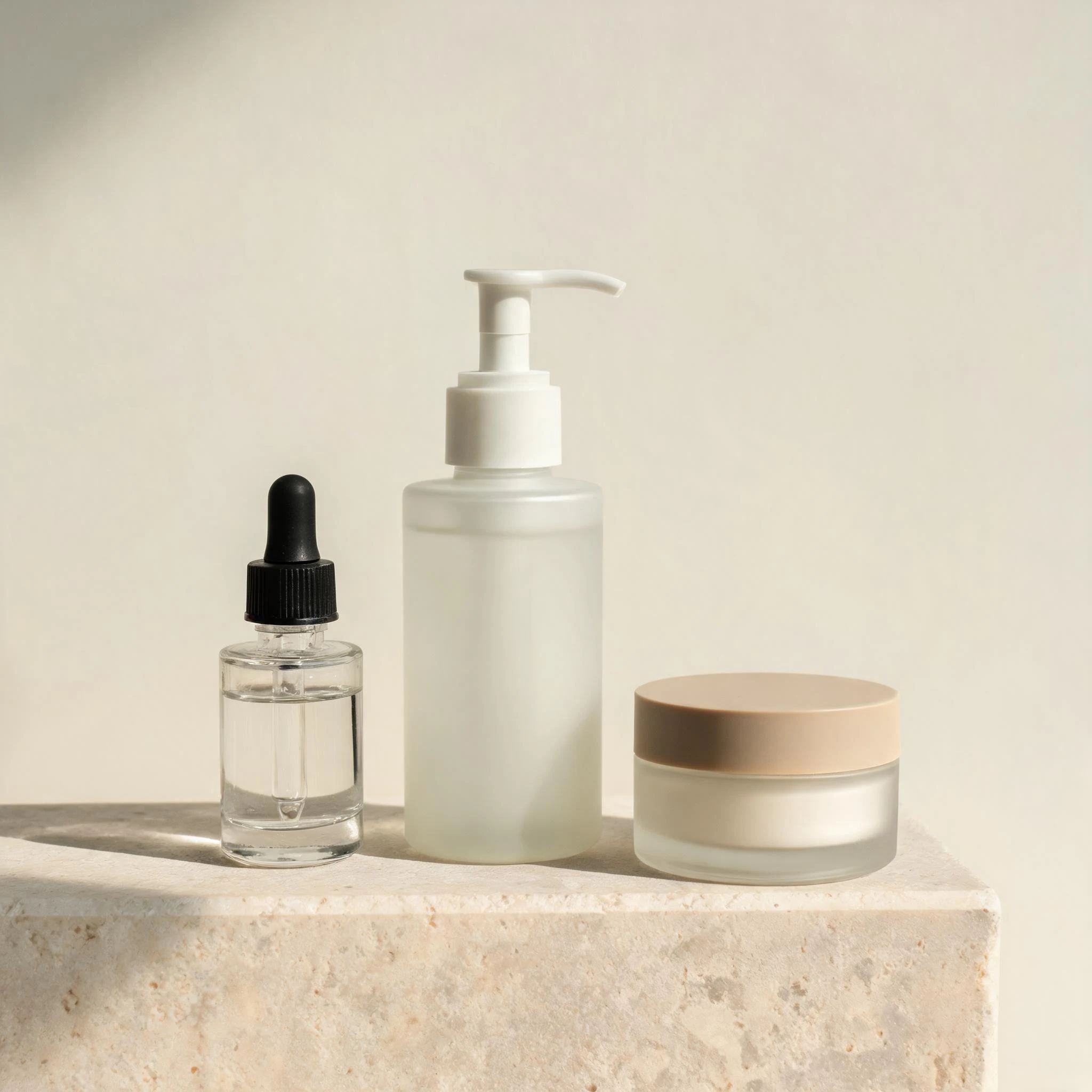
A cosmetic bottle is chosen by what goes inside it, not by the shelf it will sit on. These are the decisions that fix the specification — product and viscosity, material, capacity and dose, neck and closure, decoration — and the ones that move the minimum order and the price.
Start with the product, not the shelf
Four answers fix most of the specification before any design work begins: what the product is, how thick it is, how much is used per application, and whether light or air will change it.
- Product type and viscosity: a watery toner or a thick cream
- Dose per use: drops, pumps or grams
- Light and air sensitivity, and whether the pack has to block UV
- Preservative system and pH, which limit the materials you can use
A serum and a body lotion can share a silhouette and still need different materials, necks and closures.
Which pack fits which product
| Product | Typical fill | Usual pack | Why |
|---|---|---|---|
| Serum / essence | 30–50 ml | PETG bottle with dropper | Small precise doses, low viscosity |
| Toner / face mist | 100–200 ml | PET bottle with fine mist sprayer | Even coverage without touching the product |
| Lotion / emulsion | 200–250 ml | HDPE or PET with lotion pump | The pump lifts a thicker product without shaking |
| Cream / balm | 30–50 ml | PP jar with screw lid | Access to a thick product; it is used down to the wall |
| Body care | 400–500 ml | HDPE with disc top or pump | Large dose per use, wet hands |
Material: what you see and what it protects
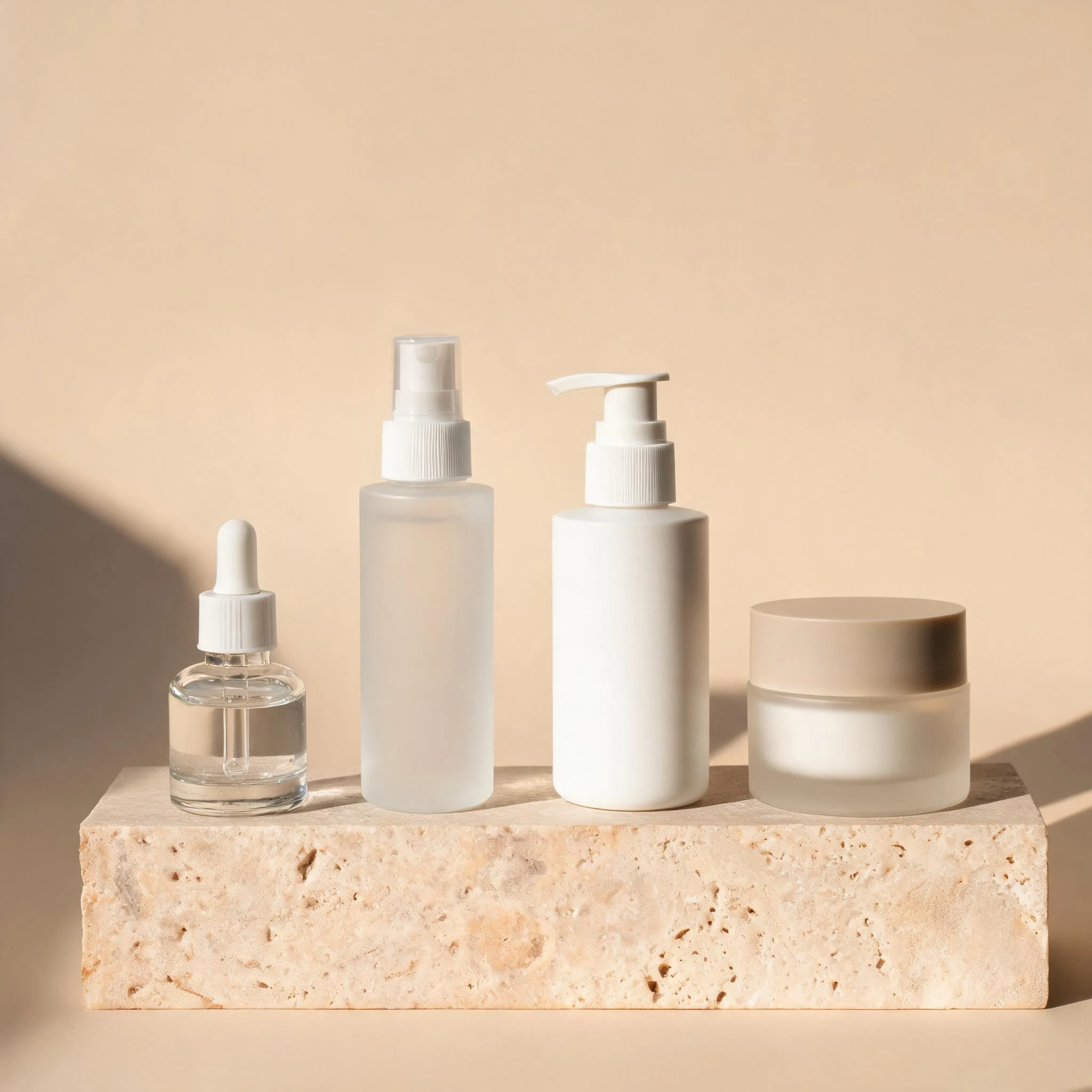
| Material | Look | Good for | Watch out for |
|---|---|---|---|
| PET | Clear, glass-like | Aqueous, alcohol-free toners and mists | Deforms with heat; poor with solvents |
| PETG | Thick-wall clarity, premium | Serums, gift sets, thick-wall cream jars | Scratches easily; higher price than PET |
| PP | Semi-clear to opaque, rigid | Essences, oil-based formulas, refills | Less glossy; limited transparency |
| HDPE | Opaque, soft touch | Lotions, cleansers, body care | No clarity; takes colour well |
| Acrylic (PMMA / SAN) | Heavy, high gloss | Premium outer bottles and caps | Heavy and brittle; rarely recycled |
| PCR PP / HDPE | Slightly hazy | Brands with recycled-content targets | Shade and strength vary with the recycled share |
If a recycled-content claim is planned, fix the grade before the colour is approved: PCR moves the shade.
Capacity, dose and headspace
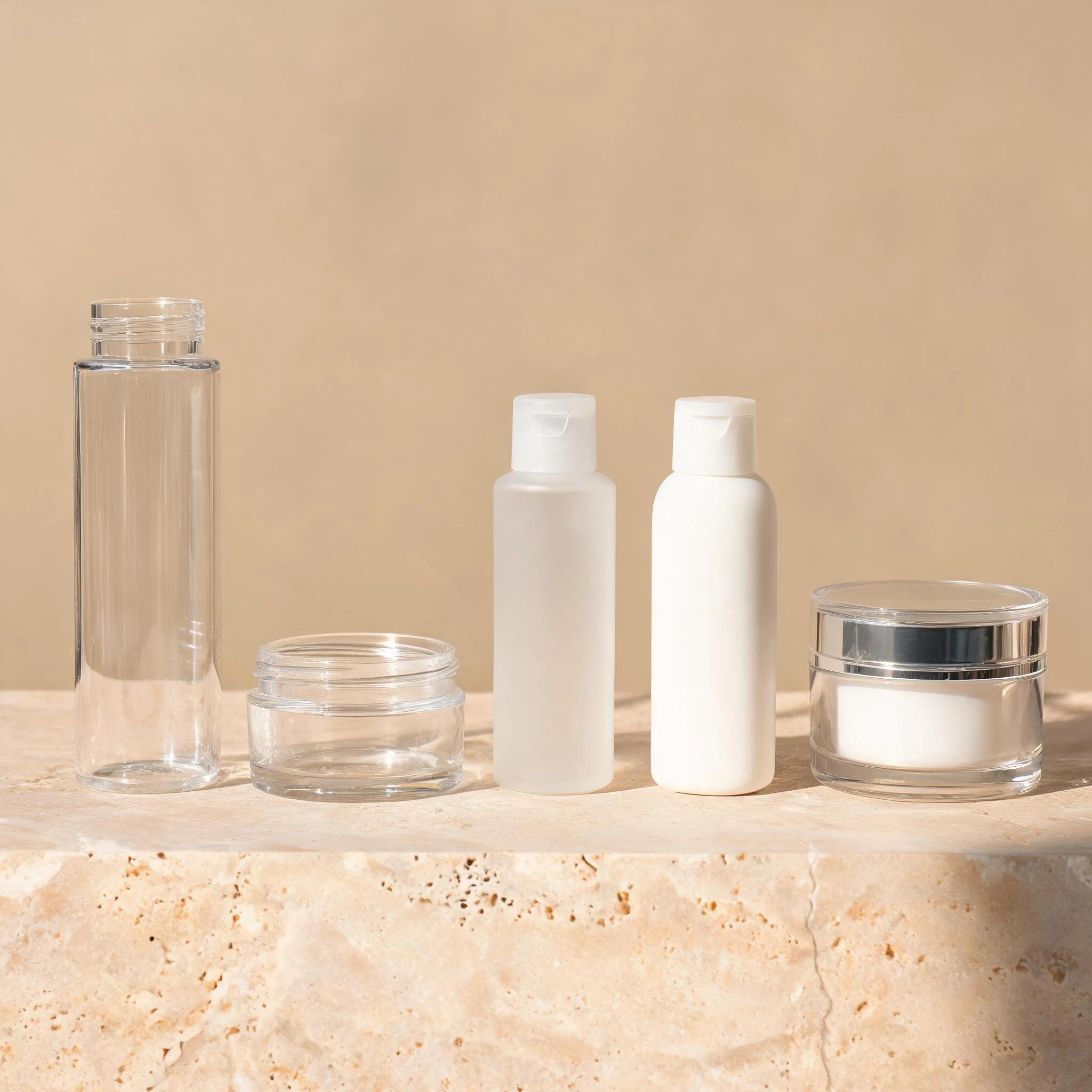
Work backwards from the dose. A serum used twice a day at 0.3 ml lasts about a month from a 30 ml bottle; a body lotion at 8 ml per use empties a 250 ml pack in a month of daily use. The fill volume has to match the habit you are selling, not the mould you already own.
- Leave 5–8% headspace so the pump or dropper can be inserted without overflow
- Agree the fill line with your filler before tooling starts
- Check the net-content rules of the destination market
- Remember that the declared volume is what the consumer receives, not the brim capacity
A 30 ml bottle that holds only 28 ml at the fill line is a labelling problem, not a mould problem: solve it before the tool is cut.
Neck finish and closure
| Neck | Usual closure | Used for | Watch out for |
|---|---|---|---|
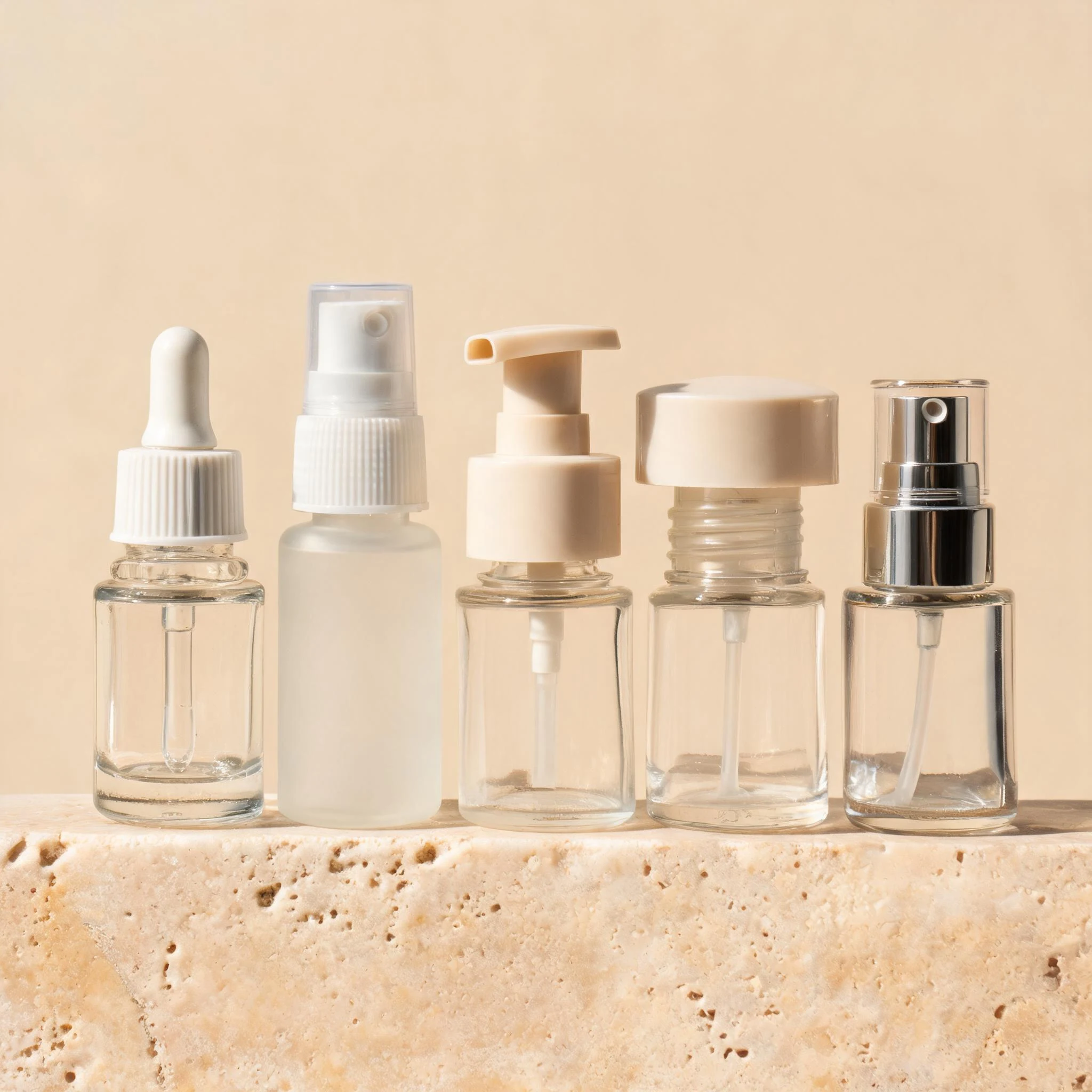
| 18/415 | Dropper or fine mist | Serum, essence | Short thread; confirm the torque and the seal |
| 20/410 | Fine mist or lotion pump | Toner, fluid | Standard for small mists; check the dip tube |
| 24/410 | Lotion pump or disc top | Lotion, cleanser | The dip tube must reach the base |
| 28/410 | Pump, trigger or screw cap | Body care, shampoo | Bigger dose; match the gasket to the formula |
| Crimp 15/18 mm | Fragrance pump | Perfume, alcohol-based | Needs crimping at the filler |
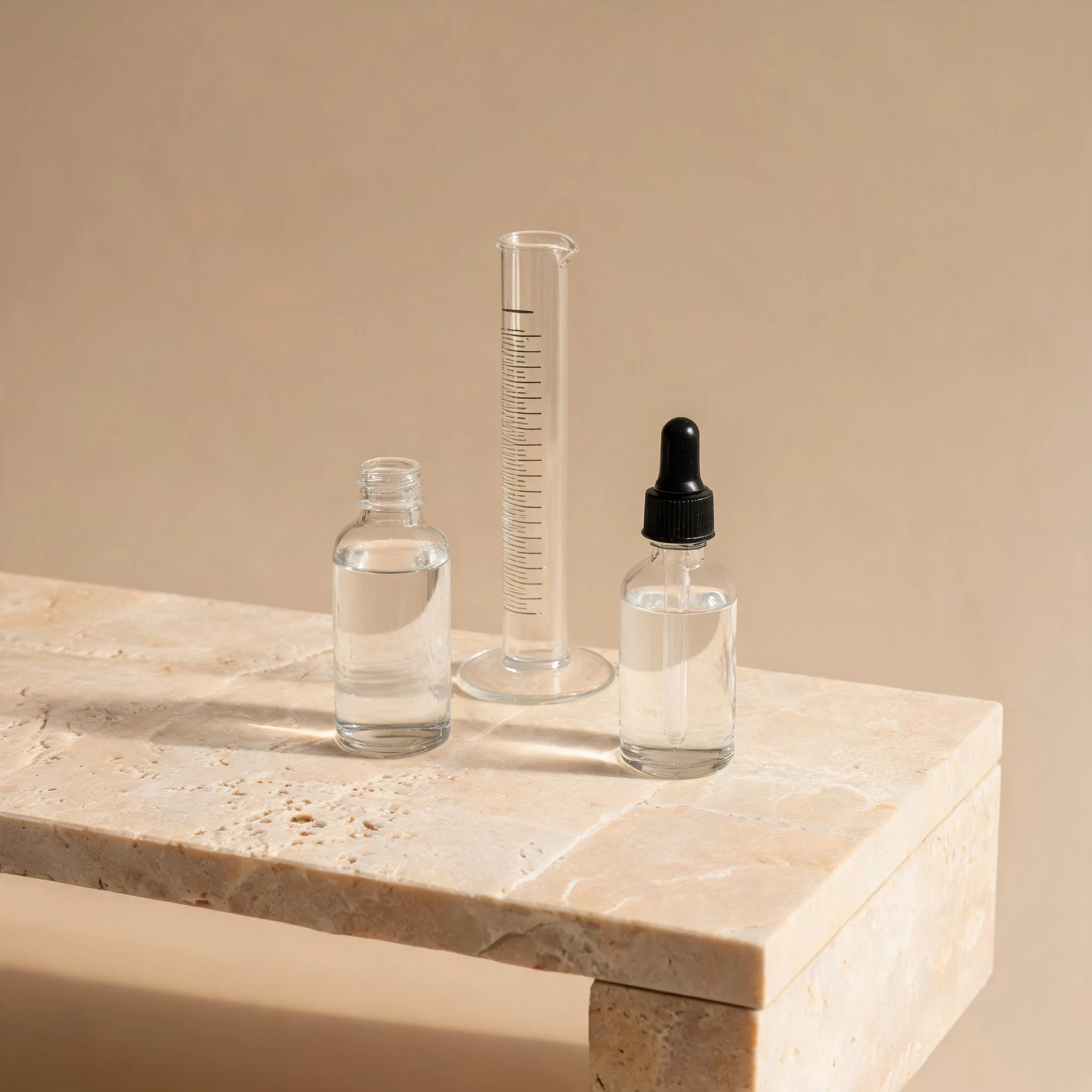
The neck is the one dimension that cannot be changed after tooling. Approve it with the actual closure in hand.
Decoration: how the bottle reads on shelf
| Method | Look | Best volume | Watch out for |
|---|---|---|---|
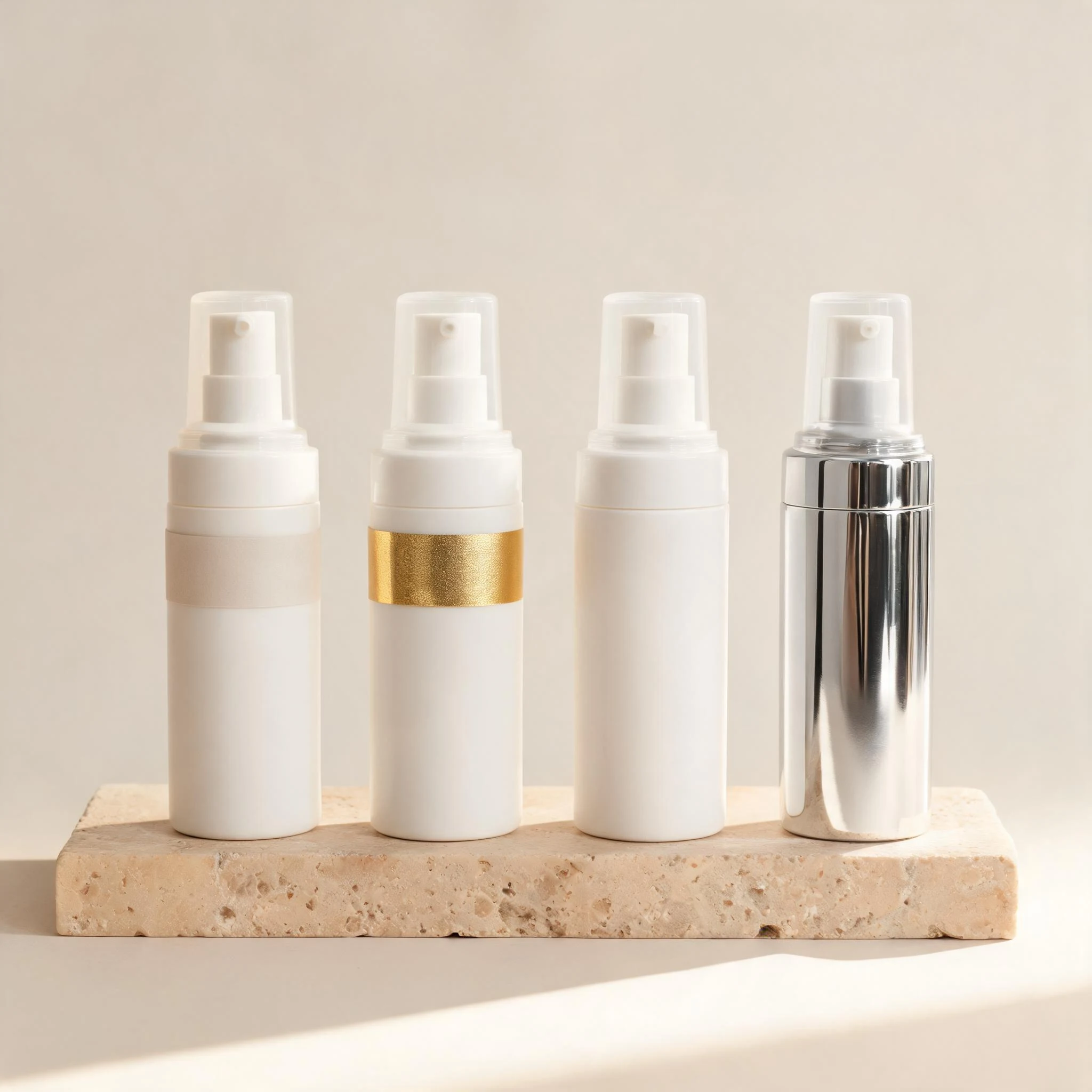
| Label | Full colour, easy to change | Any volume | The adhesive must suit the surface and the formula |
| Screen print | Direct, tactile, brand colour on the bottle | From a few thousand | Each colour adds a screen and setup |
| Hot stamp or transfer | Metallic, fine detail | Medium to large | Needs a flat or gently curved area |
| Soft touch / matte | Premium, non-slip | Any volume | Shows fingerprints; test wear and alcohol |
| Metallisation | Mirror finish | Large volumes | Cost, and questions about recyclability |
Decoration is where a stock bottle becomes your product, and where most of the lead time sits after the mould.
Sustainability: what can be claimed
- Decide the recycled-content share before the colour is approved
- Keep decoration mono-material where the design allows it
- Check whether the pump, dropper or disc top can be separated for recycling
- Keep written documentation for every environmental claim
- Offer a refill or a larger pack if the product allows it
A pump that cannot be removed is the most common reason a recyclable claim fails.
Cost and MOQ: what moves the price
- Mould: a stock shape costs nothing; a new one takes 3–6 weeks and is paid once
- Closure: the pump or dropper often costs more than the bottle itself
- Decoration: each colour, foil or coating has its own minimum run
- Order quantity and packing: cartons and pallets change the unit price
- Colour: custom masterbatch has a minimum batch, so a stock shade is cheaper
The cheapest first step is usually a stock bottle with your closure and a label; tooling can follow when the product sells.
Questions about choosing a cosmetic bottle
Can a serum and a toner share one bottle?
The silhouette can be shared, but the closure and orifice usually differ: a toner needs a fine mist insert, a serum a dropper with a controlled dose. Sharing the bottle saves tooling as long as both necks are specified together.
Is PETG better than PET for cosmetics?
PETG looks thicker and glossier, which suits premium shelf presence; PET is lighter, cheaper and easier to recycle. Choose by what the product needs to say, and check the recyclability requirements of your market.
Do we need a new mould?
Only when no stock shape covers the capacity, neck and look you need. Most first launches start from an existing mould with a custom closure and decoration.
What is a realistic first order?
With a stock mould, a few thousand pieces per colour is workable; a new mould needs a larger first run to absorb the tooling. We quote both paths so the comparison is clear.