
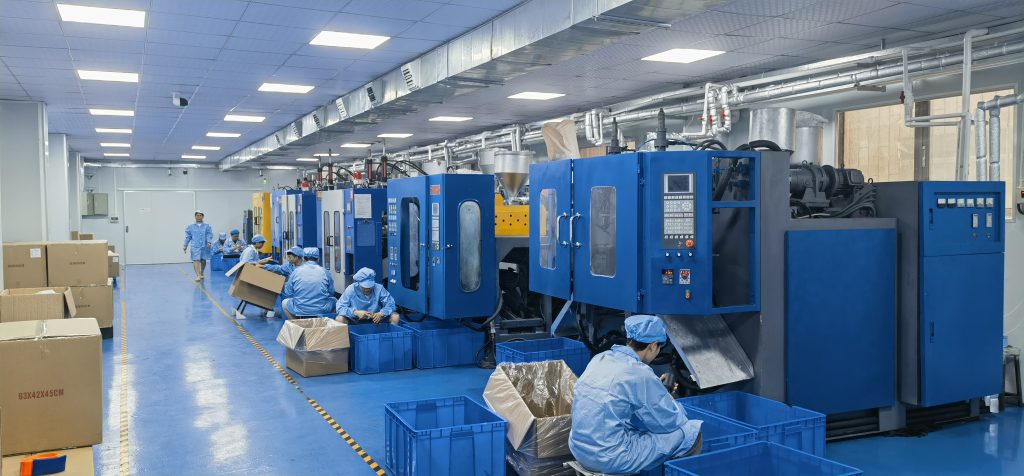
PE and PET shrink differently and need different tooling, so one mould cannot serve both materials. What that means for your tooling budget.
Some people always ask: “Why can’t PE and PET bottles share the same set of molds? It can save money。”
It sounds like a good idea, but in fact, it’s impossible. Let me explain why.
Different materials, different rules
PE and PET are two completely different plastics. They don’t behave the same way when heated, melted, and cooled. So they need different production methods and different equipment.
PE bottles (like laundry detergent bottles) are made using extrusion blow molding . Here’s how it works:
Step 1 : the machine melts PE and pushes it into a hollow tube (call a parison)
Step 2 : the mold closes around the tube, and compressed air blows the tube against the mold walls.
The bottle takes shape, cools, and comes out. This process is relatively simple and forgiving.
PET bottles (like mineral water bottles) are made using injection blow molding . This is a two-step process.
①PET is injection molded into a test‑tube‑shaped preform.
②The preform is heated, placed into a mold, and stretched while being blown into its final shape.
This gives PET bottles their crystal clarity , strong neck finish , and lightweight strength.
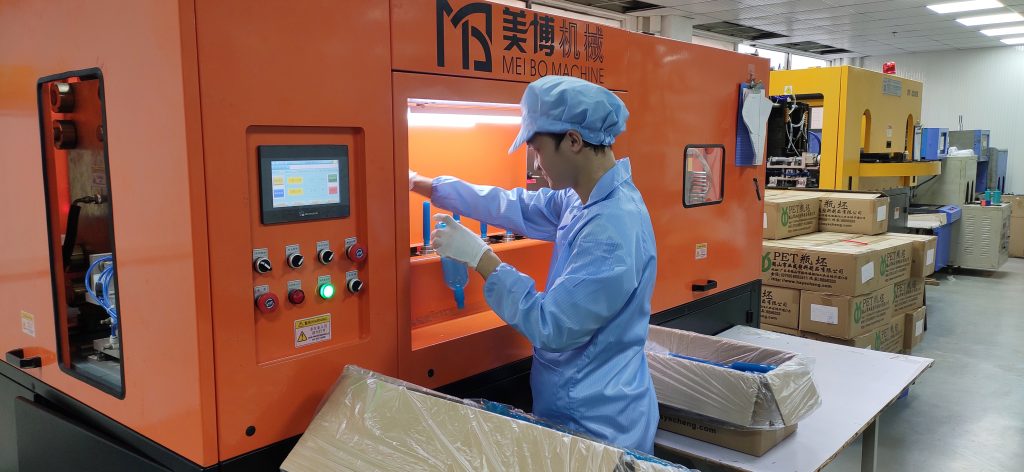
So what does that mean for molds?
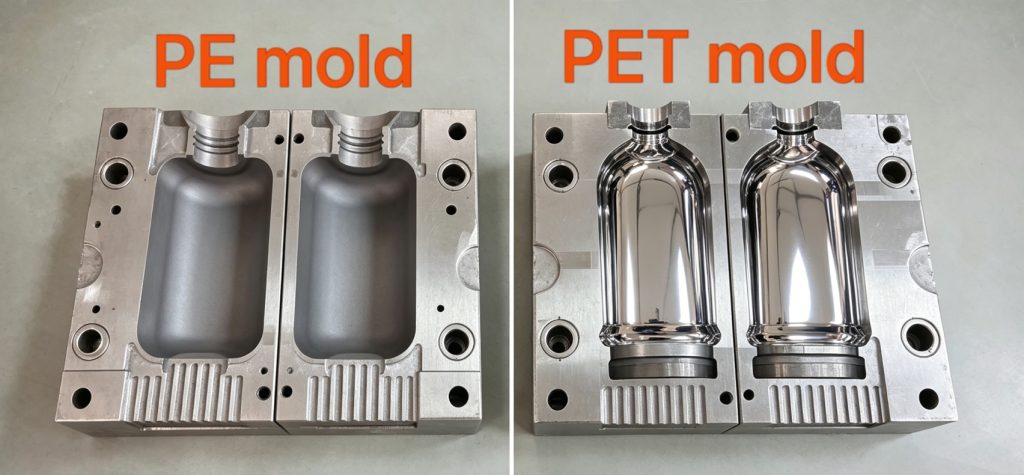
Because the processes are completely different, the molds are also completely different – in material, surface finish, and precision. Here’s a quick comparison:
If you’re developing a plastic bottle and you’re not sure which material and process fit your needs – whether for daily chemicals, cosmetics, or anything else – just reach out to us . We’ll give you clear, practical recommendations based on your product positioning, material requirements, and quality standards.