
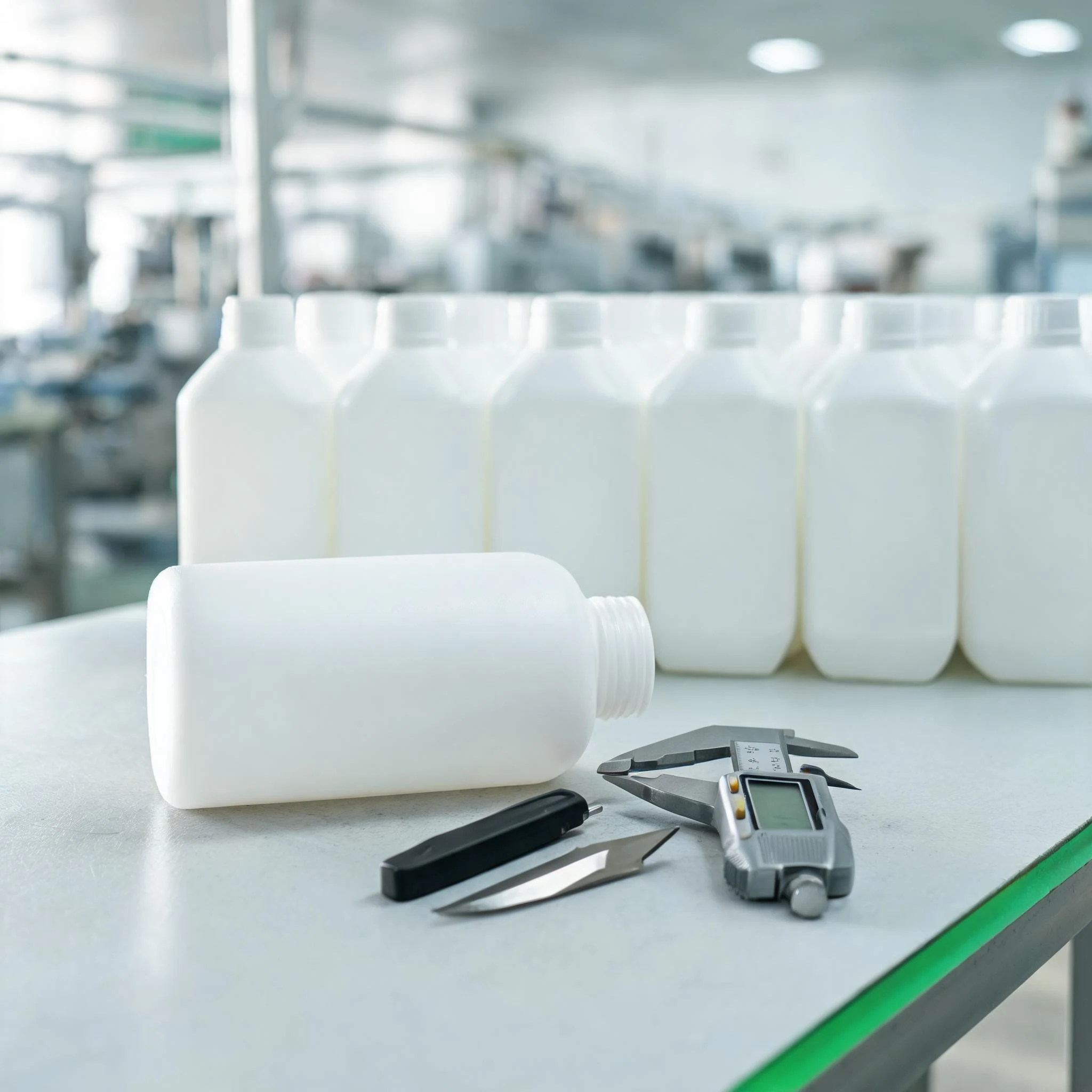
Two bottles can hold the same volume, use the same resin and sit on the same shelf, yet one feels like a finished product and the other like a workshop sample. The difference is usually a thin rim of flash left at the neck or the base. Here is where that burr comes from, what it takes to remove it properly, and how to decide whether your project should pay for a smoother edge.
Two ways to make a bottle, two different edges
Almost every plastic bottle you buy is made by one of two routes, and the route decides whether there is anything to cut off at all.
Extrusion blow moulding (EBM) pushes a tube of hot plastic — the parison — down between two mould halves. The mould closes, air inflates the parison against the cavity, and the bottle cools. Because the parison has to be longer than the bottle so it can be gripped and sealed, it leaves a tail at the top and a weld at the bottom. Both are cut away afterwards. This is how most HDPE and PP bottles are made, including anything with a handle.
Injection stretch blow moulding (ISBM) starts with a small test-tube-shaped preform that already has its final neck and thread moulded in. The preform is reheated, stretched with a rod and blown into shape. The neck is never cut, so there is no thread flash to remove — but the process only handles shapes that can be blown from a preform.
| Extrusion blow moulding | Injection stretch blow moulding | |
|---|---|---|
| How the bottle is formed | Parison inflated in a closed mould | Injection-moulded preform stretched and blown |
| Where material is cut away | Top tail, bottom pinch-off, handle openings | Nothing at the neck; only the preform gate, far below the finish |
| Neck quality | Depends on trimmer condition and knife wear | Moulded to final dimension, no trimming |
| Shape freedom | Handles, off-centre necks, oval and asymmetric bodies | Symmetrical, no handle, limited undercuts |
| Typical materials | HDPE, LDPE, PP, PVC | PET, PETG, some PP |
| Typical products | Shampoo, detergent, chemical, lotion, jerry cans | Water, oil, cosmetic, beverage bottles |
The cut edge is not a defect by itself: it is a normal part of the EBM cycle. What matters is how well it was removed.
Where the burr actually appears
A burr is simply material that was cut but not cleaned up. It shows up in three places on an EBM bottle:
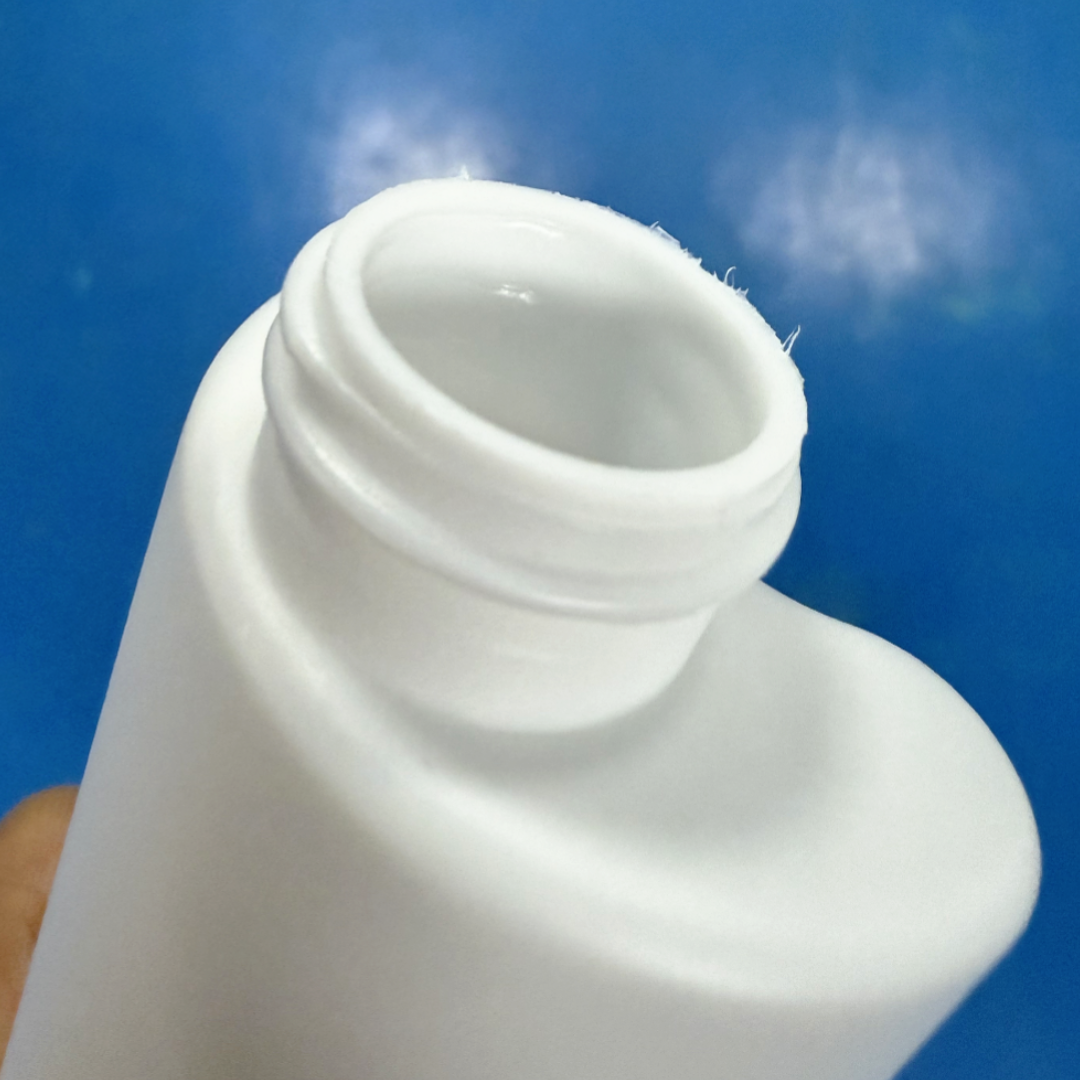
- The neck ring. A rotating or punching trimmer slices the tail away from the neck. A dull knife leaves a thin lip on the outside of the ring and can drag a shaving across the sealing surface.
- The base pinch-off. The weld line at the bottom is trimmed flush. Too little cut leaves a rim that scratches the surface it stands on; too much cut thins the weld and weakens the base.
- Handle and cut-outs. A handled bottle needs the opening between handle and body cut out, which means more knife passes and more places for a burr to survive.
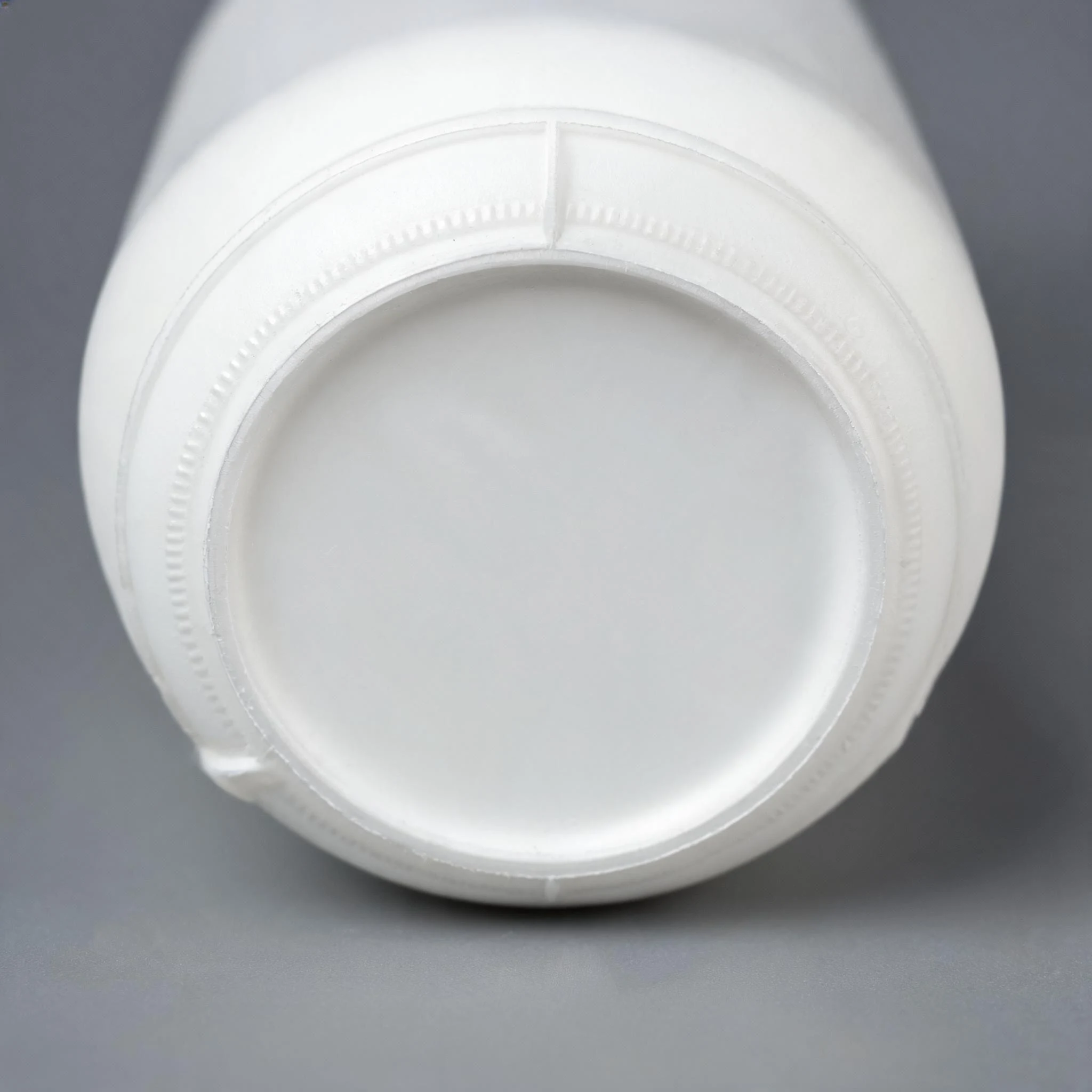
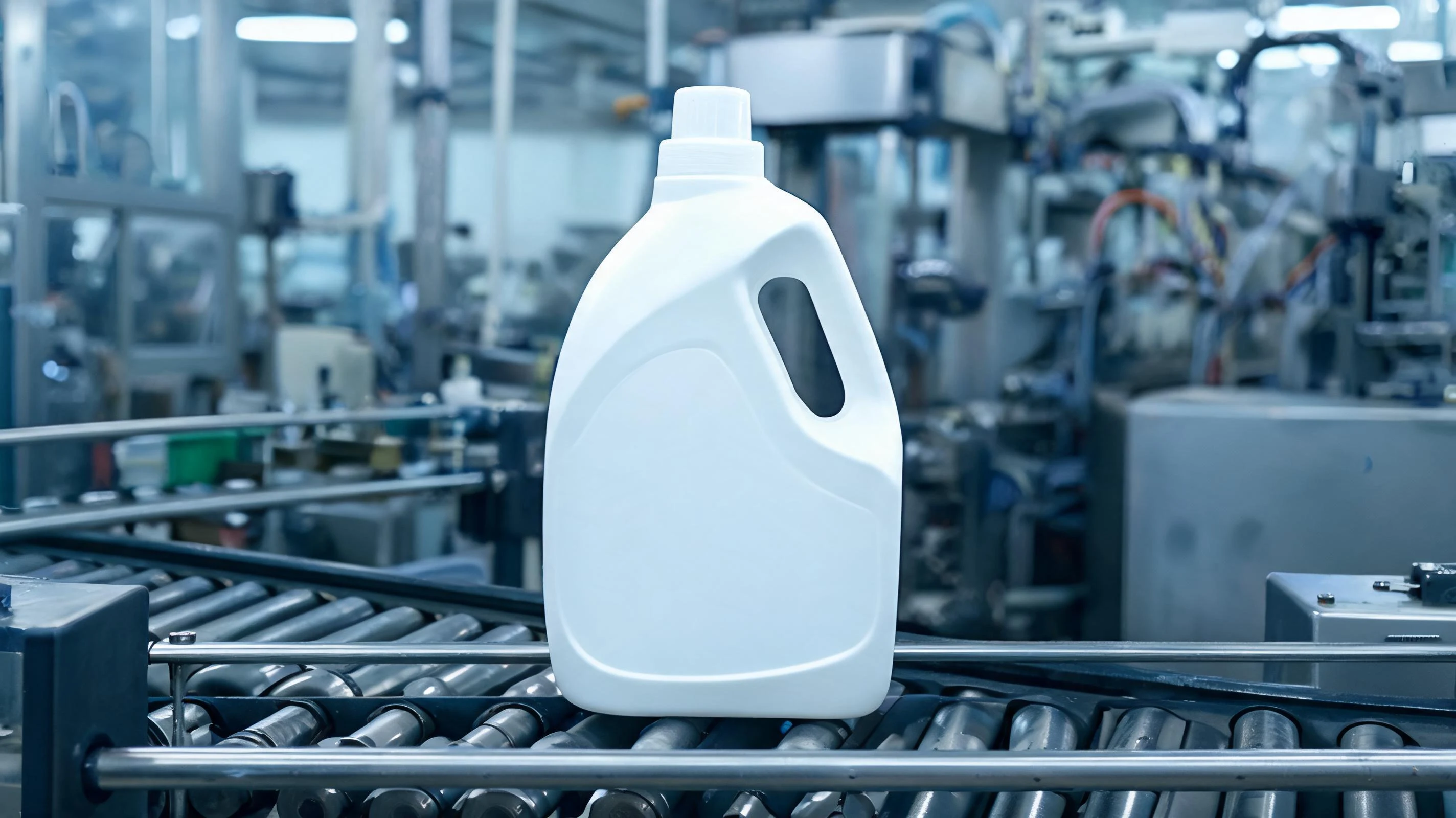
Bigger containers make the problem bigger, not smaller. A three-litre laundry or detergent bottle uses a heavier parison, so there is more material at the neck, at the base and around the handle to cut away — and a heavier wall is harder to trim cleanly with a hand knife.
Why a burr reads as bad quality
A burr is small, but it is one of the first things a customer's hand finds. It behaves like a loose thread on a garment: the garment may be well made, but the thread is what people remember.
- Touch. The thumb naturally runs around a neck while the cap is unscrewed; a rough ring is felt immediately.
- Sight. Flash catches light as a white line against a coloured bottle, and it is very visible in product photography.
- Function. Flash on the thread outside diameter raises the torque needed to close the cap and can make automatic capping heads misfeed.
- Sealing. The real risk is not the burr itself but the knife mark left on the sealing land, which is where leaks start.
- Packing. Sharp flash at the base can cut films and bags, and loose shavings inside a bottle are a recall-level complaint in food and chemical packs.
In incoming inspection, judge the sealing surface separately from the outside of the neck. A rough thread is cosmetic; a scored sealing land is a leak risk.
How flash is removed
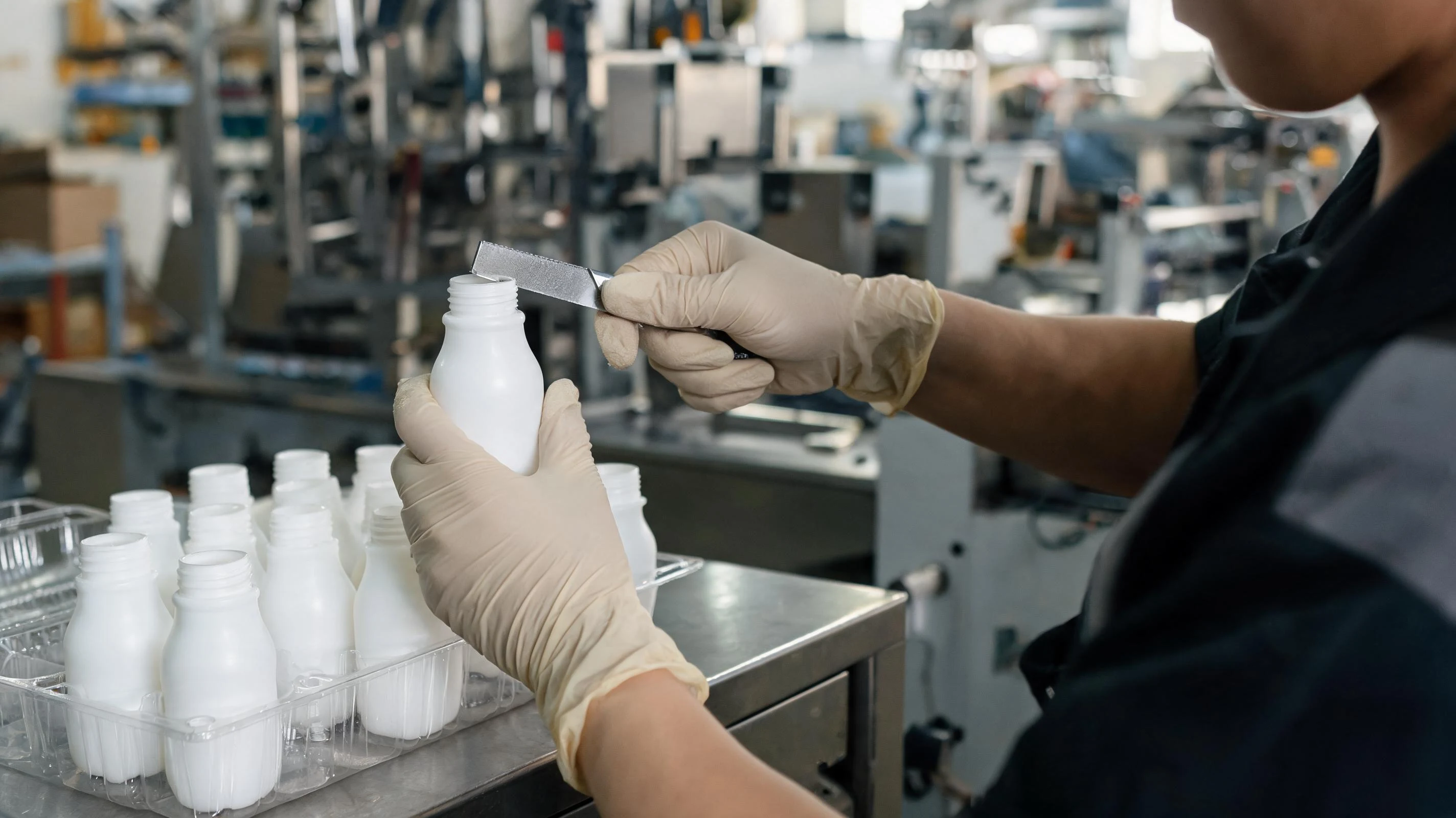
Below is the same white HDPE bottle in two states: as it leaves the mould, and after the neck has been trimmed and the edge polished.
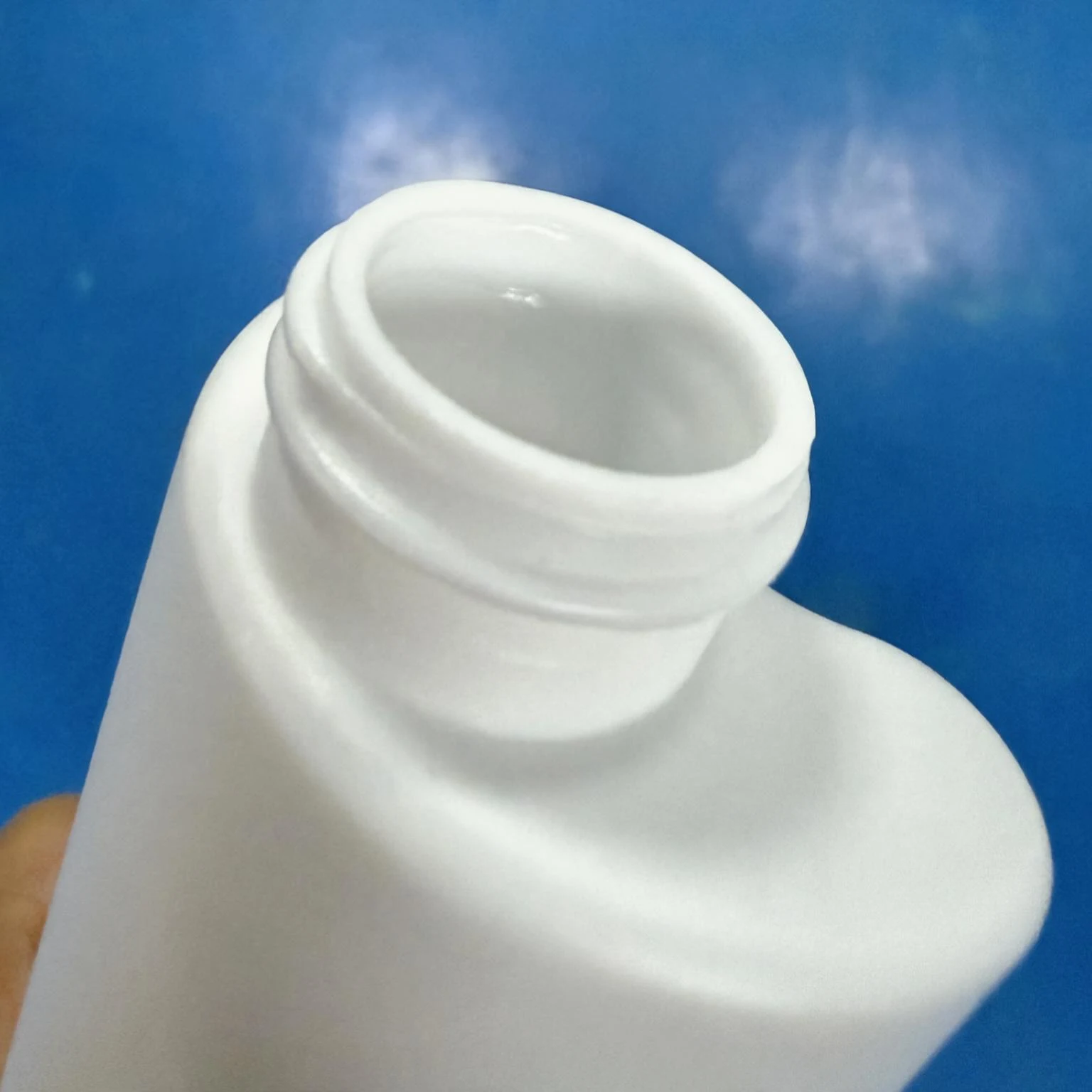
There are five common ways to clean an EBM bottle, and most factories use more than one depending on the part of the bottle.
| Method | What it does | Best for | Limits |
|---|---|---|---|
| Hand knife trim | Operator cuts the neck tail and base flush | Short runs, large bottles, thick walls | Depends on operator; inconsistent on high volumes |
| Rotary or punch trimmer | Machine cuts the neck ring to a fixed depth | Standard necks, medium to high volume | Blade wear shows up as a lip; needs scheduled changes |
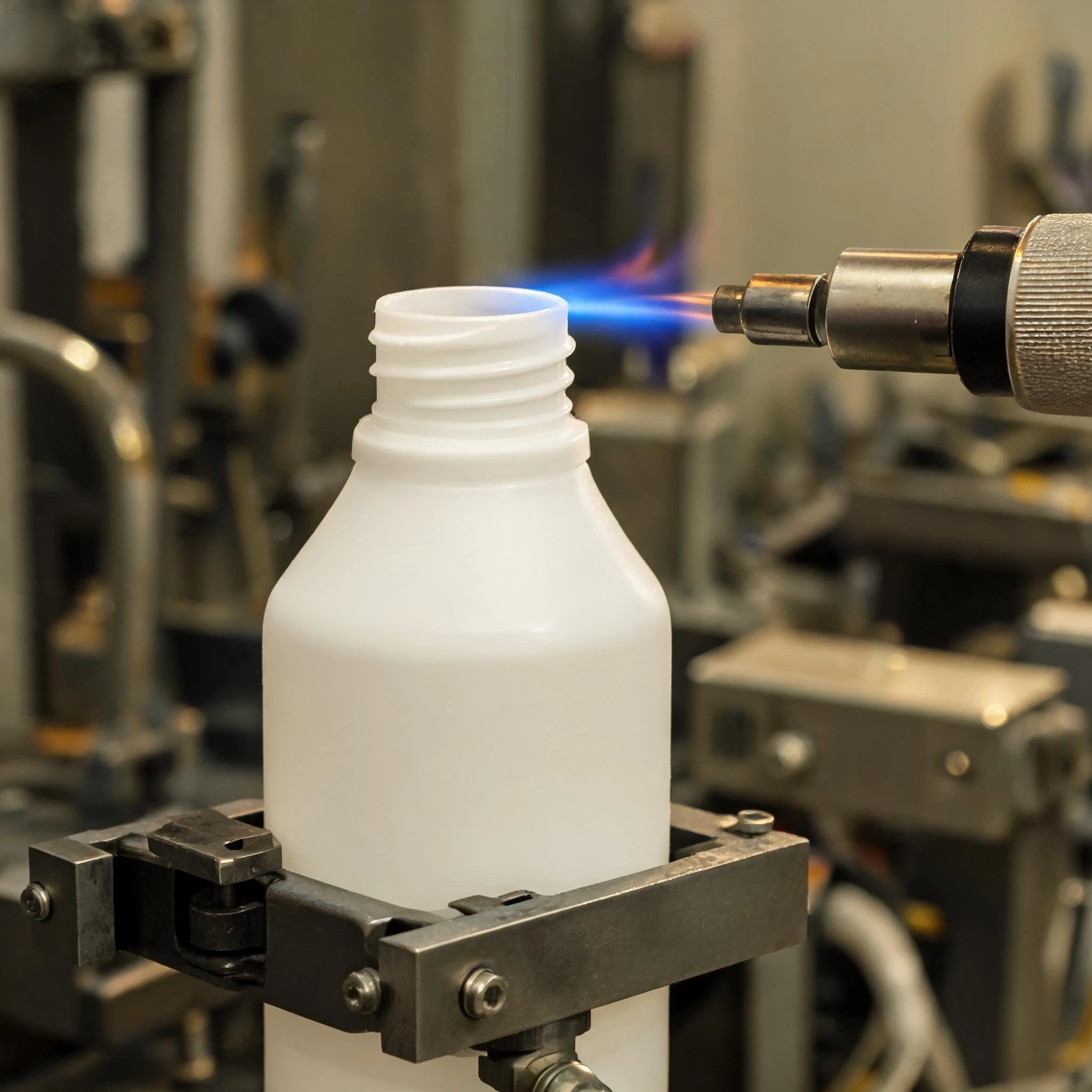
| Flame or hot-air polishing | Softens the cut edge so it rounds over | Visible necks on premium packs | Can distort thin necks; needs setting per shape |
| Cryogenic deflashing | Freezes thin flash and tumbles it off | Small parts and complex edges | Batch process, more equipment, cost per piece |
| Deburring / tumbling media | Rubs edges smooth in a drum | Small bottles and closures | Slow, can dull gloss, not for large containers |
There is also a tooling answer: the pinch-off land in the mould can be designed so the base weld is cleaner and the tail thinner from the start. It costs a little more at the tooling stage and saves trimming time on every cycle afterwards.
What a clean edge costs
Nobody charges for "deburring" as a line item. The cost sits inside the unit price, in four places:
- Time per piece. Every extra knife pass is labour. A large handled bottle can take several times longer to finish than a 250 ml shampoo bottle.
- Tooling. A better pinch-off and a trimmed neck insert cost more once, then reduce the work needed on every cycle.
- Yield. Aggressive trimming removes good bottles too: a cut that is 0.2 mm too deep turns a sealing surface into scrap.
- Inspection. A cosmetic-critical neck is usually checked visually or with a go/no-go gauge, and that check is a person on the line.
It is worth knowing the opposite risk as well. Asking for the sharpest possible trim can thin the base weld until the bottle fails a drop test, so the target is a clean and round edge, not the deepest cut.
A practical starting point: specify "trimmed flush, no sharp edge, no visible flash on the sealing land" instead of "no burr at all". The first is achievable and testable; the second is not.
Match the finish to the product
Whether a slightly visible cut line matters depends on where the bottle is sold and what the buyer does with it.
| Product segment | Finish expectation | What to specify |
|---|---|---|
| Premium personal care on shelf | Hand and eye are both part of the product | Neck flame-polished, base trimmed flush, no visible line |
| Mass personal care and household | Clean but cost-driven | Machine trim, flash removed, no sharp edge |
| Large detergent or chemical bottles | Handle and base are where buyers look | Handle opening deburred, base flush, weight checked |
| Industrial, refill and B2B | Function over appearance | Sealing land clean; cosmetic trim relaxed |
| Promotional or single-use packs | Short life, lowest unit cost | Basic trim, no sharp edge on the hand-contact area |
If your product sits at a mid or premium price, the extra finishing is one of the cheapest quality signals you can buy. If it is a low-cost consumable competing on price alone, the clean-edge budget is better spent on wall consistency or on the cap.
The ISBM route: smooth by construction
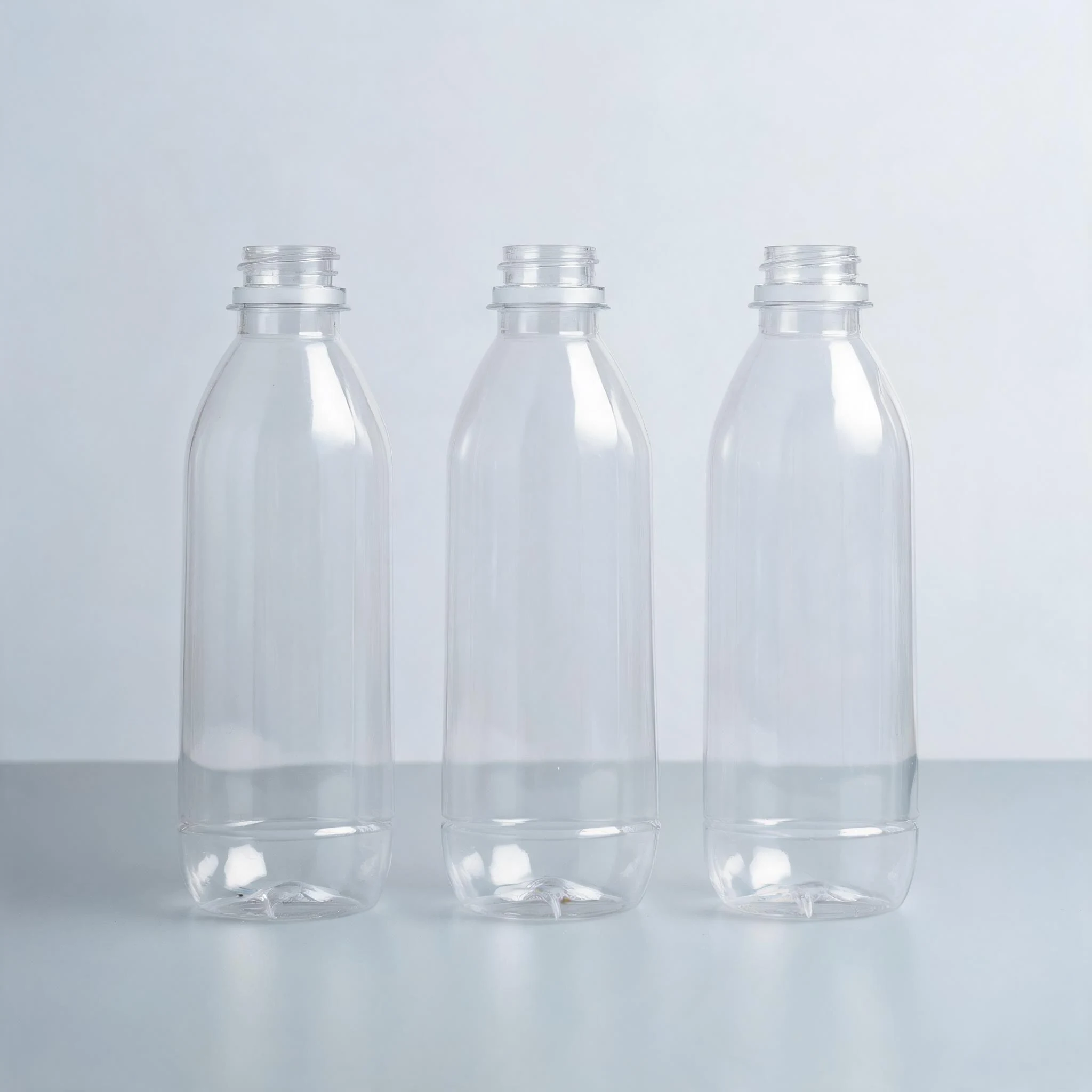
When there is no flash to remove, the discussion changes completely. An ISBM bottle has a moulded neck with a sharp, dimensionally stable thread, a smooth base and no cut line anywhere on the body — which is why clear PET bottles look so clean next to a trimmed HDPE bottle.
The trade-off is shape. ISBM needs a preform and a blow mould, cannot form an integrated handle, and struggles with strongly asymmetric bodies and sharp undercuts. Wall distribution is controlled by the preform design rather than by the parison, so a designer has less freedom to make one side thicker.
- Choose ISBM when the bottle is symmetrical, clear or high-gloss, and the neck must be dimensionally exact.
- Choose EBM when the bottle needs a handle, an offset neck, a soft squeeze feel or a wide-mouth jar shape.
- At low volumes, ISBM also carries the preform tooling cost; a stock preform can remove most of it.
There is no "better" process in general. A laundry bottle with a handle cannot be made by ISBM at any price, and a clear 500 ml water bottle is rarely made by EBM.
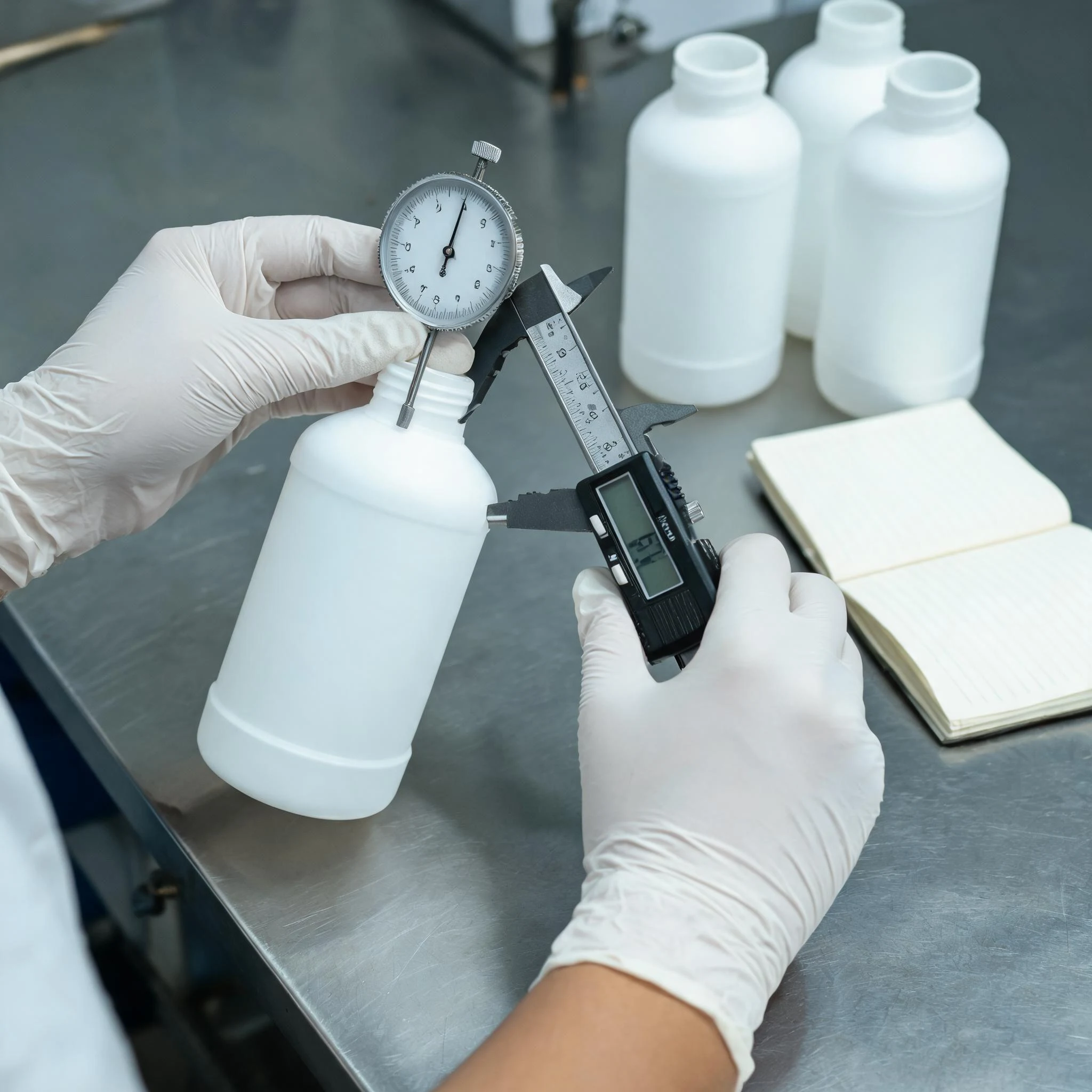
Incoming inspection: six checks
You do not need a laboratory to judge this. Six checks on a sample carton will tell you whether the finishing is under control:
- Run a thumb around the neck ring and along the base edge with your eyes closed. Anything you can feel as a step is a burr.
- Hold the bottle against a window or a light box. Flash shows as a white hairline, especially on coloured bottles.
- Screw and unscrew a cap ten times. It should turn smoothly without a gritty feel or a sudden tight spot.
- Look at the sealing land inside the neck with a torch. A radial knife mark there is a leak waiting to happen.
- Weigh ten bottles. A sudden drop in weight usually means the trimmer is cutting deeper than it should.
- Fill and drop one bottle from 1.2 m onto a hard floor. A base that cracks at the weld line was trimmed too aggressively.
Write the result down per batch. Finishing problems are almost always drift — a worn blade, a new operator, a warmer day — rather than a single bad decision, and a short record makes the drift visible before your customers see it.
Questions buyers ask about burrs and finish
Does a burr on the thread cause leaks?
Usually not by itself. Leaks come from damage to the sealing land inside the neck, or from a cap that cannot seat because flash lifts it. Check the sealing surface separately from the outside of the thread.
Can a supplier guarantee "no burr at all"?
Not honestly, on an extrusion blow moulded bottle. The realistic specification is a trimmed flush edge with no sharp feel and no flash on the sealing land, confirmed on a sample you have handled.
Why do two bottles from the same mould feel different?
Because trimming is a separate operation. Parison temperature, knife sharpness, trimmer depth and operator technique all move during a shift, and the bottle that reaches you reflects the state of the line on that day.
Can we ask for flame polishing on a large bottle?
On the neck, yes, if the wall is thick enough to take the heat. Flame polishing a thin base or a handle usually distorts the shape, so it is best limited to the neck area.
Is a smoother bottle always more expensive?
Not always. If the tooling is designed with a cleaner pinch-off and the trimmer is maintained, the unit price difference can be small. The cost grows when the requirement is cosmetic on a part that is hard to reach, such as the inside of a handle.