
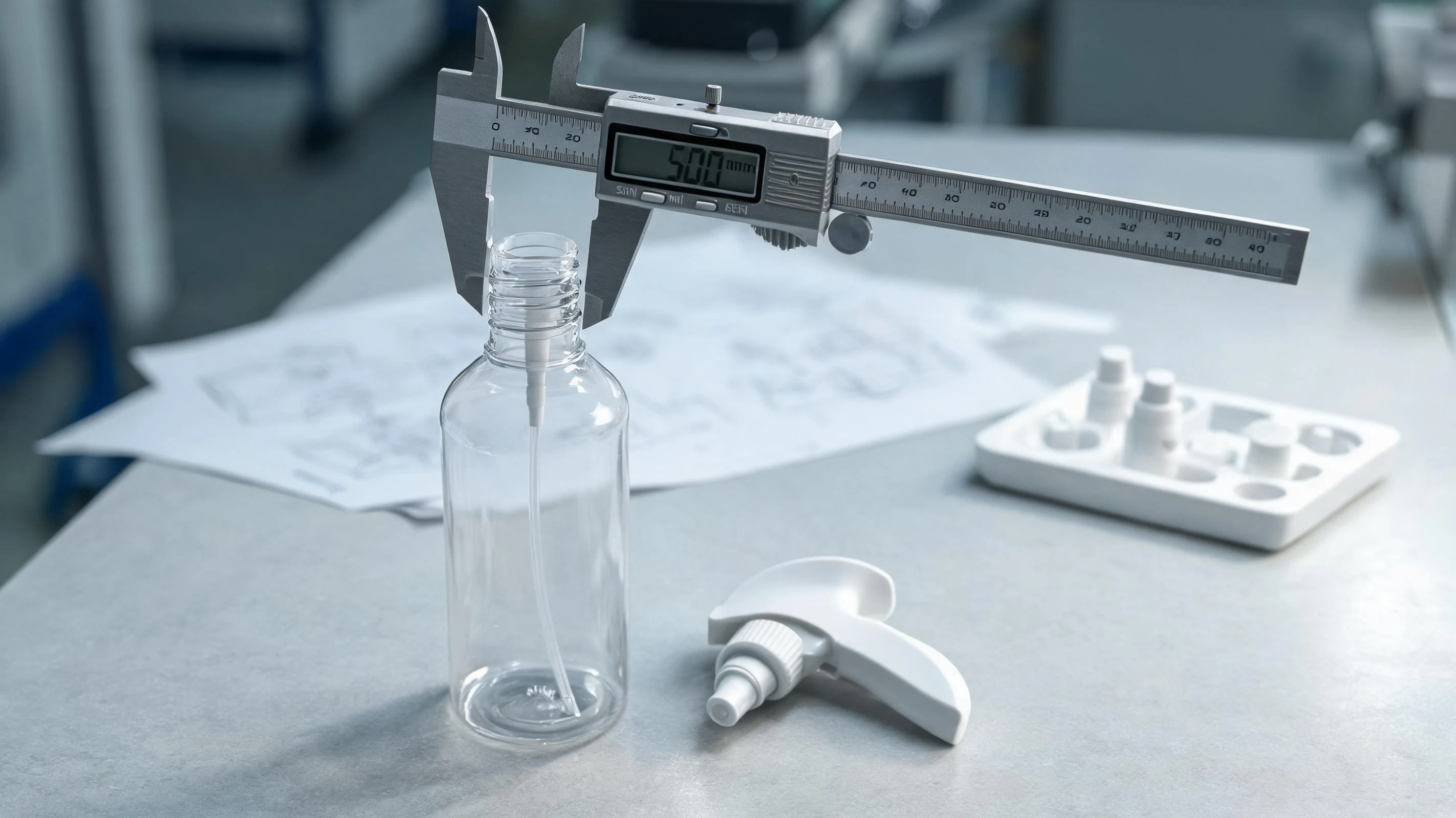
A custom spray bottle rarely fails on shape. It fails at the joint: the neck that has to hold the sprayer, the collar that has to seal it, and the tube that has to reach the last millilitres of liquid. When those three parts are matched before the mould is cut, the custom bottle behaves exactly like the sample you approved. When they are not, the project spends its sample rounds chasing a drip that no decoration can hide.
A spray bottle is three joints, not one bottle
Designers spend their time on the silhouette, and buyers spend theirs on the price. The problems arrive in between, at the three places where separate parts meet:
- Neck to sprayer. The sprayer sits on the neck, the gasket is compressed against the sealing land, and the collar holds the whole assembly down. If the neck dimensions are off by a few tenths of a millimetre, the thread still catches but the seal never forms.
- Dip tube to bottle depth. The tube has to reach the base without touching it, and stay straight when the bottle is half empty and tilted.
- Shoulder to sprayer body. A trigger sprayer is levered by hand, several hundred times per bottle. If the shoulder or the neck wall deflects under that load, the collar works loose and the spray pattern changes as the bottle empties.
Factory quotations usually start from the body. In practice the body should be designed backwards from the sprayer you intend to use, because the sprayer is the part with the least freedom.
What a neck finish actually specifies
“28/410” is shorthand, not a full drawing. The first number is the nominal neck diameter in millimetres. The three digits describe the thread and bead standard, which is why a 28/410 and a 28/400 look similar and seal differently. Four dimensions decide whether the joint works:
| Dimension | Where it is measured | What fails when it is wrong |
|---|---|---|
| Bore (T) | Inside diameter at the sealing land | Too small, the sprayer spigot will not enter; too large, the gasket never compresses and the collar drips |
| Thread diameter (E) | Across the thread crests | Too tight and the collar binds and cracks; too loose and it backs off under pumping |
| Neck height (H) | From the rim down to the shoulder | Collar bottoms out on the shoulder before the gasket seals, or sits visibly proud |
| Support bead | The ring below the thread | Tamper-evident band and some collars have nothing to rest on |
The thread does not seal a spray bottle. The gasket does. The thread only generates the force that compresses it, so thread depth and neck height matter as much as the diameter printed in the part number.
410 and 400 are not the same neck
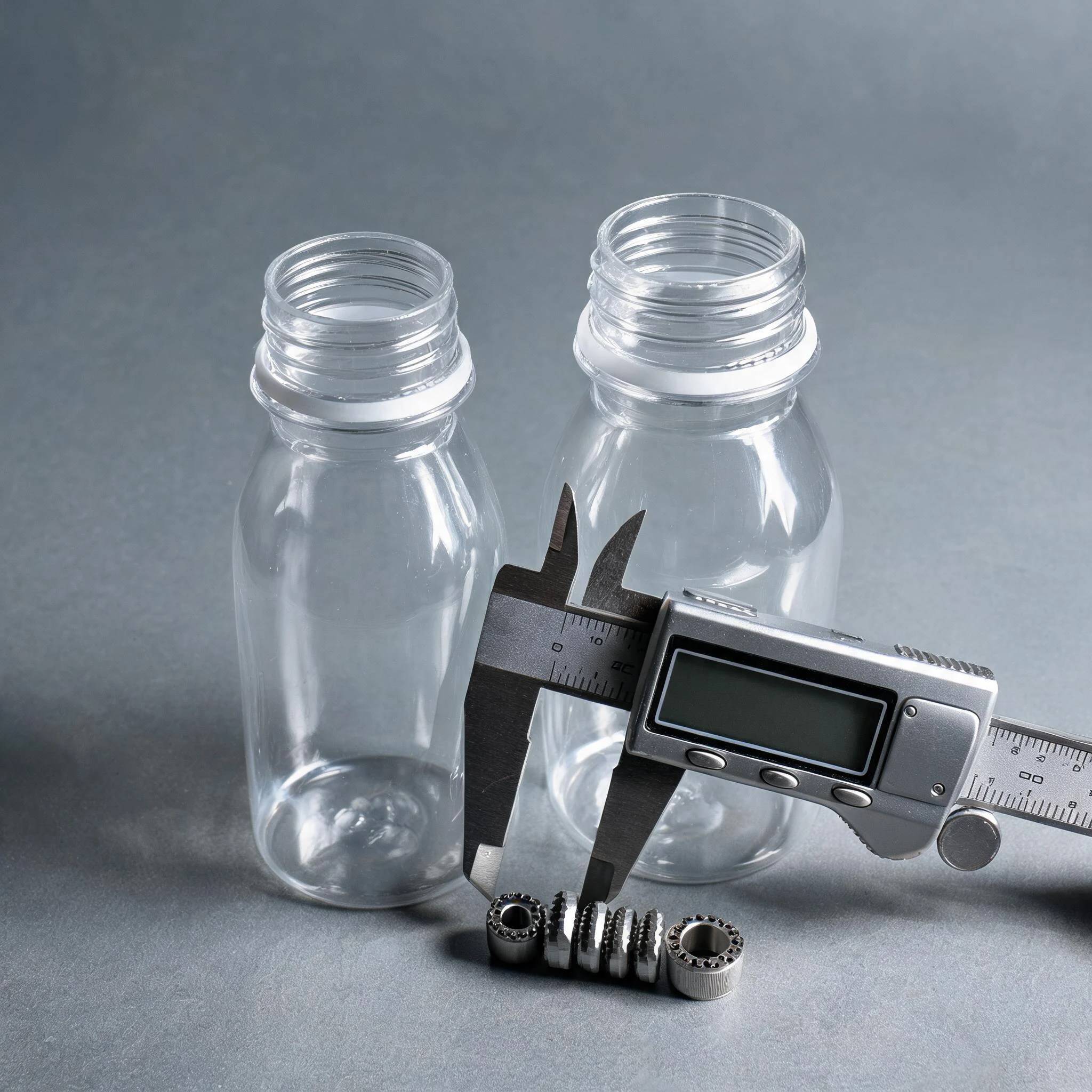
The 410 finish has a shallow, fast thread that most trigger sprayers are built around; the 400 finish is deeper with more turns, common on lotion and beverage closures. They share a diameter and nothing else.
- A 410 sprayer on a 400 neck often screws on one turn, then rides up: the gasket is lifted and the bottle weeps at the collar.
- A 400 closure on a 410 neck binds halfway, and forcing it cracks the collar or strips the thread on the bottle.
- Mixing two suppliers’ interpretations of the same code is the most common cause of a leak that appears only after filling.
This is why we ask for the sprayer first on any custom trigger bottle, and why a neck sample in the actual resin is worth more than a 3D render.
Dip tube: length, cut and material
The tube is the cheapest part on the bottle and the one most often cut by eye. Three rules keep it working to the end of the fill:
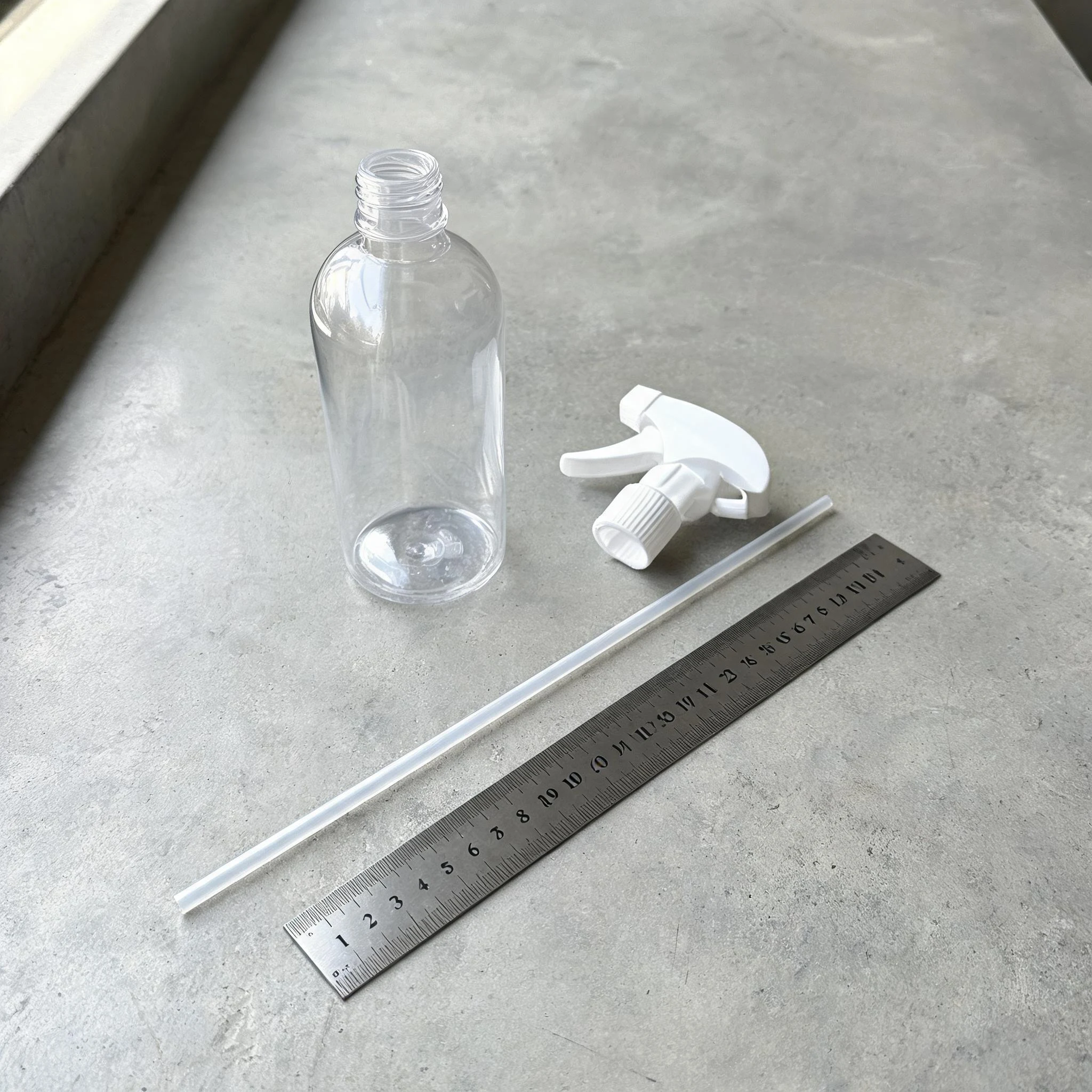
- Length. Measure from the underside of the collar to the base and subtract 1.5–3 mm. Touching the base blocks the inlet and makes the spray stutter; too short leaves a slug of product that the customer can see and cannot use.
- Cut. A square cut is right for upright use. For a bottle that is sprayed at an angle, cut at 30–45° so the inlet stays in the liquid when the bottle is tipped.
- Material and bore. LDPE tube is flexible and forgiving in a tall bottle; PP is stiffer and stays straight in a narrow neck. A wider bore gives a wetter, higher-output spray; a narrow bore gives a finer mist and more pumps per millilitre.
Custom body, stock sprayer: three failures we test for
| What the customer reports | What is usually wrong | What we change |
|---|---|---|
| Weeping at the collar after filling | Neck height too short, so the gasket is not compressed | Neck insert reworked to the sprayer drawing; gasket thickness confirmed |
| Sprayer spins loose while pumping | Thread diameter at the upper limit, or a soft shoulder that deflects | Thread tolerance tightened; neck wall and shoulder radius increased |
| Sputters when the bottle is a third full | Tube too short or curled away from the low corner | Tube length recalculated on the filled bottle, angled cut |
| Fine mist turns to a jet after a few hundred pumps | Air ingress through the collar, or a tube that draws air at the base | Collar torque checked; tube clearance to the base set |
Six measurements before the mould is cut
This is the half hour of work that decides whether the tooling is right. We take these from the approved sprayer, not from a catalogue page:
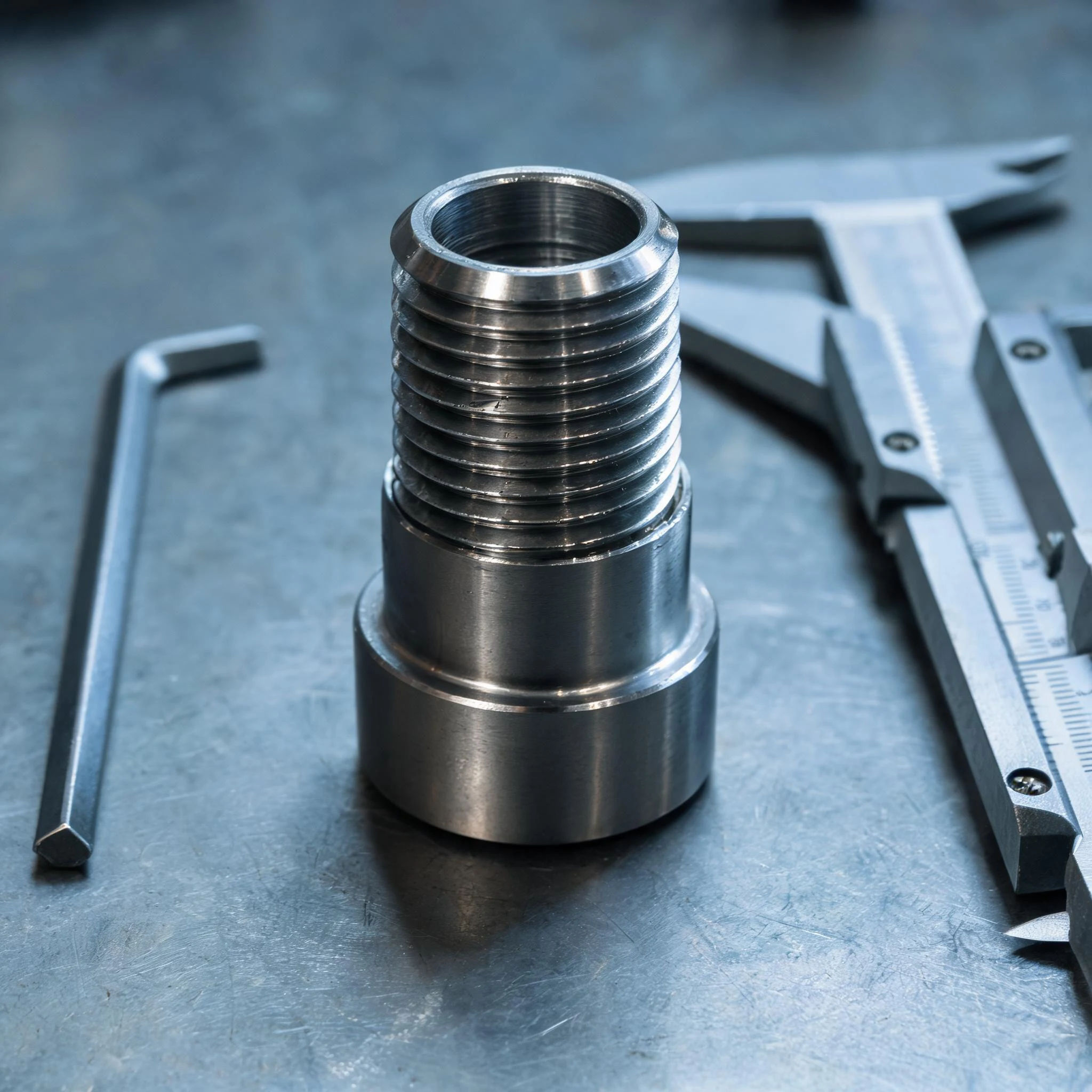
- Bore and sealing land geometry, measured with a caliper and a thread gauge.
- Thread style and pitch, checked by screwing the actual sprayer onto a machined sample neck.
- Collar height and skirt depth, which set the neck height tolerance.
- Gasket type and thickness, including how much compression the sprayer expects.
- Dip tube diameter, and the insertion depth into the sprayer body.
- Filled weight, so the tube length is calculated on the real fill level, not on the nominal capacity.
For a custom body we cut a neck sample in the production resin and fit the real sprayer to it before releasing the mould. It costs a few days and removes the most expensive kind of sample round.
Sample tests that find fit problems
Once a sample bottle exists, six checks tell you whether the joint is production-ready:
- Screw and unscrew the sprayer ten times and record the torque on the first and last turn.
- Fill to the nominal level and stand the bottle upside down for 24 hours on white paper.
- Leave a filled bottle at 40 °C for a week, then repeat the inverted test.
- Pump 200 times and watch for a change in pattern, output or trigger feel.
- Drop a filled bottle from 1.2 m onto a hard floor, cap on, and check the neck for stress marks.
- Spray until the bottle is nearly empty and confirm the tube still picks up liquid when tilted.

What a late neck change costs
Changing a colour or a label after approval is routine. Changing the neck is not, because it sits in the steel:
| Change | What has to be redone | Effect on schedule |
|---|---|---|
| Neck finish only | Neck insert rework or replacement, new fit samples | Days, and the rest of the mould is untouched |
| Neck plus shoulder | Body mould rework, wall and weight re-validation | Weeks; all decoration samples are scrapped |
| Switching sprayer supplier | Fit samples, torque settings, gasket confirmation, re-approval | Depends on the new supplier’s tooling; the bottle may need no change |
| Found after filling | Filled stock, labels, secondary packaging | Most expensive case: product, not packaging, is lost |
If a neck has to change late, change only the insert. Anything that reaches the shoulder re-opens the weight, the wall thickness and every decoration approval behind it.
Questions buyers ask about spray bottle fit
Can I use our existing sprayer on a new custom bottle?
Yes, and it is usually the cheaper route: the sprayer stays approved and the bottle is built to it. Send us the sprayer, or its drawing plus three production samples, and the neck is designed around it.
Why does the sprayer drip at the collar only after filling?
Because the seal is load-dependent. An empty bottle does not push liquid against the gasket. If the neck is a little short or the gasket a little thin, the leak appears only once there is weight and movement in the bottle.
How long should the dip tube be?
From the underside of the collar to the base, minus 1.5–3 mm. Measure on the filled bottle: a tube that clears the base on an empty bottle can touch it once the base bulges under load.
Can you copy the neck of a bottle we already sell?
We can match the finish by measurement and confirm it with a fit sample, provided the design is not protected. Send a bottle and the sprayer you intend to use; we will report the dimensions and any deviation before quoting tooling.